




When you learn about vehicle surface protectants, it’s only natural to have questions about whether you should choose ceramic coating over paint protection film (PPF), or whether you can do both PPF and ceramic coating.
After all, both of these vehicle protection upgrades are designed to function as a protective layer between your vehicle’s paintwork and our everyday environment. It makes sense that you would need to choose one or the other.
However, you may be surprised to learn that, while they are effective on their own, ceramic coating and PPF are also a recipe for success together. Keep reading to learn how below:
What is Ceramic Coating?
Ceramic coating is a liquid polymer that a professional technician applies to the exterior surface of a vehicle, be it paint, plastic, or glass. It’s designed to bond with the factory clear coat and function as a hydrophobic layer to protect against contaminants, UV rays, and chemical stains. Most quality ceramic coating products provide years of protection.
What is Paint Protection Film (PPF)?
Paint protection film, commonly referred to as PPF, is a urethane film layer installed on a vehicle’s paint to protect it from scratches, chips, and UV damage. Many of the best PPF products are self-healing, meaning heat from the sun or hot water can also remove swirls, scuffs, and light scratches from the film, helping protect its longevity.
Can You Do Both PPF and Ceramic Coating?
Many people ask, ‘Is PPF and ceramic coating the same?’ and it’s a valid question to ask when you learn that both are designed to protect the exterior of your vehicle. However, these are two very different products that work effectively on their own and together. In fact, there is great value in asking your local auto detail and paint protection experts to provide both services.
What PPF does best:
- Provides impact protection from light scratches, rock and stone chips, and road debris
- Delivers self-healing properties to make minor scratches disappear with heat
- Preserves the factory paint in high-impact areas
- Prevents swirl marks from daily use and washing
PPF limitations:
- Minimal protection against oxidation and chemical staining
- Requires more maintenance without a coating on top
What ceramic coating does best:
- Repels water, dirt, and grime
- Protects against fading, oxidation, and UV rays
- Resists chemical stains, such as tree sap, bug splatter, and bird droppings
- Allows for faster and safer washing
Ceramic coating limitations:
- Limited scratch resistance
- Doesn’t stop physical impacts like rock chips
How ceramic coating and PPF work together
Where PPF’s effectiveness is limited, ceramic coating steps in. The same can be said for when the ceramic coating’s protection isn’t comprehensive. When combined, you can expect a two-layer protection strategy for your pride and joy.
- Paint protection absorbs impacts and prevents paint damage. When self-healing, it also heals light scratches before they reach the paint.
- Ceramic coating steps in to enhance and seal everything. A trusted professional can install it over PPF and exposed paint.
- Not only does ceramic coating add slickness, gloss, and chemical resistance, but it also keeps PPF cleaner and prevents yellowing and staining.
The best PPF and ceramic coating strategy
Thinking about installing ceramic coating over paint protection film? Talk to your trusted local professionals about the best strategy for PPF and ceramic coating installation. In most cases, experts recommend installing PPF on high-impact areas and ceramic coating over all PPF-covered panels and any remaining painted surfaces.
How to Wash a Car with PPF and Ceramic Coating
Cleaning your vehicle after applying PPF and ceramic coating requires a slightly different approach than cleaning it when it is entirely unprotected. Learn how to wash a car with PPF and ceramic coating below:
Never:
- Use automatic car washes with brushes that may lift PPF edges
- Use harsh chemicals, abrasive cleaners, or degreasers
- Wash your vehicle in direct sunlight
If you’re unsure or want to leave this task to the professionals, don’t be afraid to request an auto detailing service from a trusted professional.
Follow this washing process:
- Prerinse the vehicle to remove loose dirt and grit.
- Perform a foam pre-wash to lift and loosen remaining dirt, then rinse thoroughly.
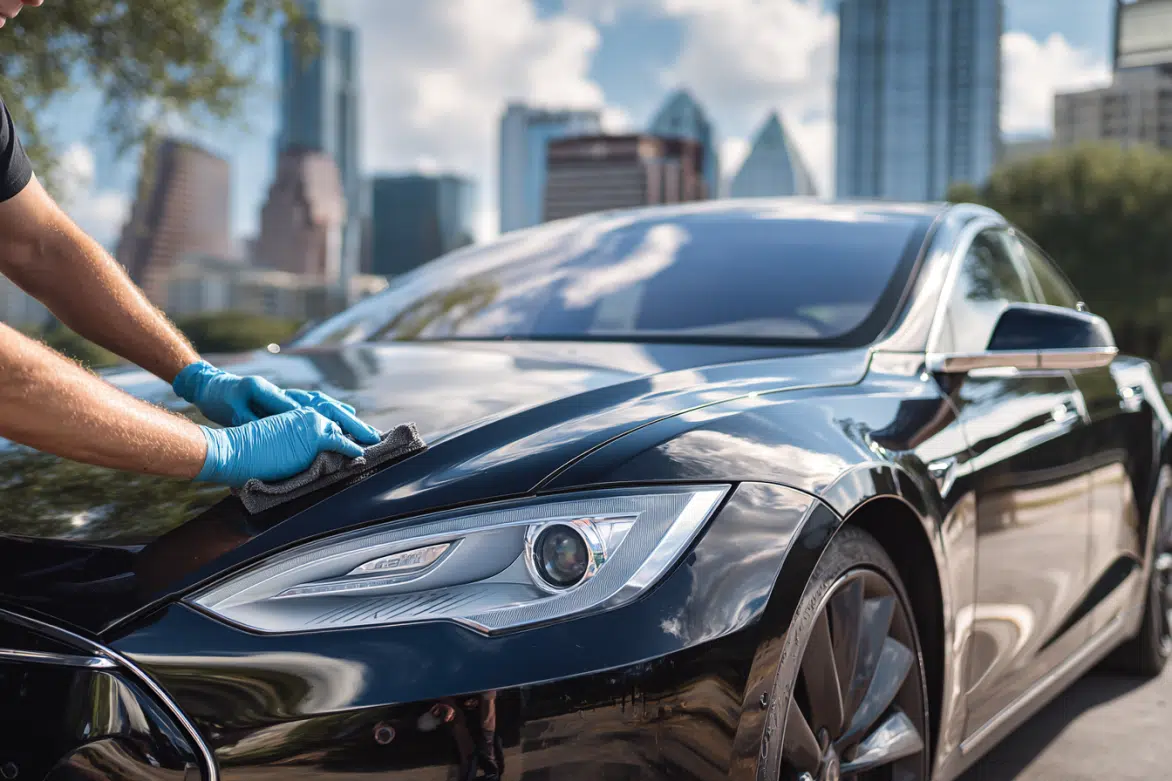
- Perform a two-bucket hand-wash: one bucket with soapy water and another with rinsing water. Apply light pressure and rinse your wash mitt frequently. Use straight-line motions instead of circles.
- Perform a final rinse to remove all soap. You’ll know the ceramic coating is working properly when the water beads and runs off.
- Safely dry the car by blotting it dry with microfiber towels or using a touchless car dryer. Don’t drag towels across the vehicle surface.
Who Should Install PPF and Ceramic Coating?
Not everyone sees the value in PPF and ceramic coating, but both of these vehicle protectants are crucial for the following people:
- New vehicle owners who want to preserve the factory paint to avoid costly paint correction later.
- Luxury and exotic vehicle owners who want to protect their vehicle’s high-end, luxury paints that are easier to scratch and more expensive to repair.
- Daily drivers and highway commuters who are at an increased risk of rock chips and debris damage.
- Enthusiasts and car collectors who want to maintain a showroom-level finish and protect future resale value.
- Lease owners who want to prevent excess wear-and-tear charges.
Book Ceramic Coating and PPF with Xtreme Auto Detail
Are you ready to provide your vehicle with the creme de la creme of paintwork protection? It’s time to install PPF and ceramic coating. The experienced automotive detailers at Xtreme Auto Detail in Austin, Texas, are here to help.
Contact us today to learn more about the advantages of installing ceramic coating over paint protection film and experience them firsthand. Our team proudly serves Austin and nearby communities, including Bee Cave, Lakeway, and Hudson Bend.


