







Out of all the things to ruin your car’s paintwork, water is probably the last thing you’d expect. However, if you live in Austin, Texas, this can be the reality! Due to the limestone bedrock in the region, innocent-looking water droplets on our vehicles can actually be leaving mineral stains that etch clear-coat and glass within a matter of hours! The harsh and damaging UV rays can further exacerbate the damage.
The good news is that you don’t have to sit back and let your vehicle succumb to thousands of dollars’ worth of damage. Instead, you can take preventive measures! Keep reading to learn why the damage occurs, what you can do when it happens, and how to prevent it going forward.
The Science of Hard-Water Spots
Our hard water is undoubtedly to blame for those frustrating spots we find on our paintwork. Because of the limestone bedrock, our water contains minerals like calcium and magnesium. When the water dries on our vehicles, it leaves behind mineral deposits, creating those pesky spots!
The harsh Texas sun certainly doesn’t help, either. It acts as a magnifying glass, concentrating the heat on the minerals, forming a reaction between them and the clear-coat on your vehicle. Over time, the paint can begin to fade, crack, and succumb to other damage.
DIY Prevention Methods for Hard-Water Spots
We can’t control the volume of minerals in our water, so how can we control the damaging water droplets on our vehicles? While we can’t, there are plenty of DIY prevention methods for hard-water spots!
Don’t Wash Your Vehicle In Direct Sunlight
As tempting as it can be to wash your car when the weather is nice, it can wreak havoc on your paint! Sunlight causes the water to evaporate too quickly. You’re then left with those problematic hard-water spots you were trying to get rid of in the first place!
Dry Your Vehicle
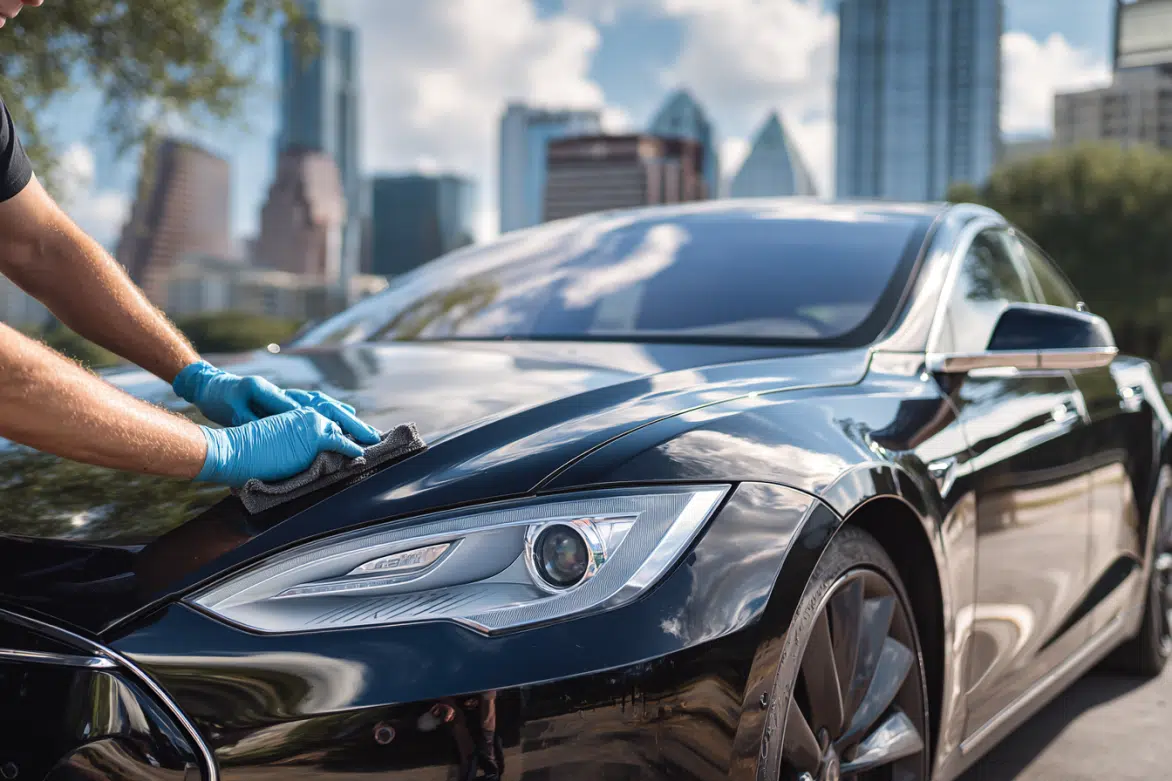
In the same way that you wouldn’t let the sun dry your vehicle, you shouldn’t leave it to dry itself if you want to avoid water spots. Use a clean microfiber towel to dry it, instead.
Use a Water Softener or Deionizer
If you regularly wash your vehicle at home, consider investing in a water softener or deionizer. These systems are designed to remove minerals from your water to reduce the risk of water spots that threaten to cause damage.
Professional Removal Methods for Hard-Water Spots
Once hard-water spots on your vehicle have taken hold, it’s not always easy to get rid of them. The good news is that they don’t need to be permanent. Professional car detailers employ these removal methods:
Paint Decontamination
Paint decontamination is a mild, non-aggressive approach to water spot removal. Professional detailers will start with this method before trying more aggressive ones if needed.
There are several paint decontamination methods to try, including:
- Clay bar: A form of clay that removes contaminants like mineral deposits from vehicle paint without damaging it
- Water spot removers: Products with chelating agents or mild acids to dissolve or lift deposits like calcium and magnesium
- Washing and rinsing: Quality car wash soap may be all it takes to remove water spots. Use distilled or purified water to rinse it off.
Machine Polishing
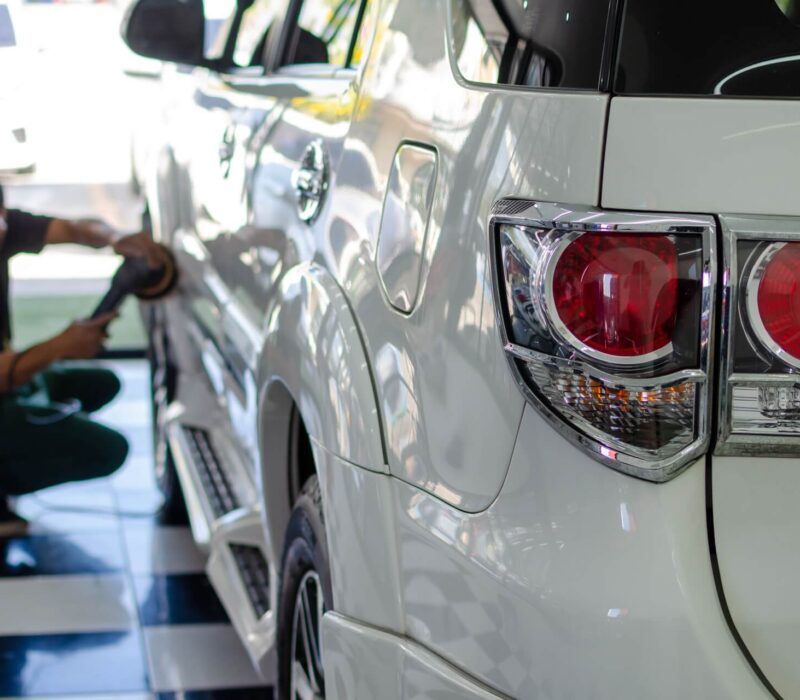
If you’ve accidentally left water spots on your vehicle in the hot Austin sun, and now they’ve baked on, try machine polishing. A light polish, which removes a thin layer of clear coat, can be effective for removing water spots. Some polishes are also designed to prevent water spots from forming in the future.
Chemical Products
You don’t always need to put in a great deal of elbow grease to give hard-water spots their marching orders. Chemical products can sometimes be helpful.
Try a 50/50 mixture of white vinegar and water, with the acetic acid in the vinegar helping to dissolve mineral deposits. You can also try the 30 Seconds Water Spot Remover. Apply it with a non-scratch scouring pad before rinsing it off and drying it.
Many people have luck with water spot-specific acids, like hydrochloric acid and citric acid, to dissolve minerals. However, great care must be taken with such products, as they are harsher than more natural options like vinegar.
Ceramic Coating: Long-Term Protection Against Hard-Water Spots
As wonderful as it is that preventive measures and removal methods exist, most people would prefer that they didn’t have to deal with hard-water spots, at all. Fortunately, your local trusted auto detailer can assist with long-term protection in the form of ceramic coating.
Ceramic coating is a protective coating for vehicle paintwork made from silicon dioxide (SiO2). Once applied, it forms a chemical bond with the paint to provide a durable and protective layer.
Alongside protecting against contaminants and UV rays, ceramic coating has hydrophobic properties. This means that water beads up and rolls off the paint, rather than spreading out and drying. The protective layer also acts as a barrier, stopping the harmful minerals from making direct contact with the paint and causing damage. You’ll love that it’s far easier to clean, too!
Discuss Hard-Water Spot Prevention with Xtreme Auto Detail in Austin, Texas
As a team of locals in Austin, Texas, we get it. Hard-water spots are annoying! We’re here to help make them a problem of the past. Contact us to request a no-obligation quote for ceramic coating and other detailing services. We’re your one-stop shop for a range of auto detailing services, including window tinting, detailing, paint protection film, residential tinting, and more.